

Hair care doesn't start at the ends — it starts at the roots. More and more people paying attention to their hair are reaching for a scalp tonic: a lightweight formula that goes exactly where hair actually grows from. This guide explains what a scalp tonic is, which ingredients are worth looking for, how to apply it correctly, and how to match it to your specific scalp type. No marketing promises — just the practical details.
What Is a Scalp Tonic and How Does It Work?
A scalp tonic is a lightweight, usually fast-drying cosmetic applied directly to the scalp between sections of hair, rather than to the hair itself. It has a liquid or gel-like texture and doesn't need to be rinsed out. Its role is to deliver active ingredients close to the hair follicles and to support the scalp's hydration, oil balance, or cleansing — depending on the formula.
People often confuse a tonic with a scalp treatment oil. The main difference is texture and use: a treatment oil tends to be thicker, often oil-based, and is massaged in more vigorously, sometimes for longer. A scalp tonic is generally lighter, water-based, and designed for quick daily use. The two can share similar ingredients — it's the format, not the content, that usually defines the category. You'll find more on richer treatment formulas in our hair oils and serums range.
Tonic, Treatment Oil, or Serum — What's the Difference?
- Tonic — light, water-based, for everyday use, no rinsing.
- Treatment oil — often thicker or oil-based, applied with a massage.
- Serum — a concentrated formula, usually applied to specific areas of the scalp.
All three are meant for the scalp itself, not the length of the hair.
What Active Ingredients Should a Good Scalp Tonic Contain?
A good scalp tonic is chosen primarily by its ingredient list, and that list should match a specific concern. Different substances work well for oily scalps, others for dry and sensitive ones, and others still when dandruff is the issue. It's worth reading the INCI list and looking for ingredients with a documented role in cosmetics, rather than names that simply sound impressive.
Among the most common ingredients are rosemary extract and oil, which has been studied in relation to scalp condition, and caffeine, a popular cosmetic ingredient associated in research with stimulating microcirculation. Niacinamide is often included for its role in regulating sebum and calming irritation, panthenol and aloe for hydration, while zinc pyrithione and piroctone olamine are ingredients used in cosmetics formulated for dandruff-prone scalps. Menthol, meanwhile, gives a cooling, fresh sensation.
Ingredients Worth Recognizing on the Label
- Rosemary — a botanical ingredient studied for its effect on the scalp
- Caffeine — associated in research with stimulating microcirculation
- Niacinamide — used for oily and irritated scalps
- Panthenol, aloe — for hydration and soothing
- Zinc pyrithione, piroctone olamine — for dandruff-prone scalps
What Does the Research Say About Rosemary Scalp Tonics?
Rosemary is one of the most frequently discussed ingredients in scalp tonics. Interest grew after a randomized comparative trial by Panahi and colleagues (2015, published in SKINmed), in which 100 men with androgenetic alopecia used either rosemary oil or 2% minoxidil over six months. After six months, both groups showed a significant increase in hair count, and the difference between the two groups wasn't statistically significant.
The authors also noted that scalp itching was reported less often in the rosemary group. The proposed mechanisms — effects on scalp microcirculation and on the 5-alpha reductase enzyme — remain hypotheses that need further research. Some caution is warranted here too: this was a small trial, the comparison used a lower minoxidil concentration, and the results call for confirmation in larger studies. A rosemary scalp tonic can be a reasonable choice, but it shouldn't be treated as a guaranteed solution.
How to Apply a Scalp Tonic — Step by Step
A scalp tonic is applied along partings, directly onto the scalp rather than the hair. It's usually applied to dry or slightly damp skin, sectioning the hair so the product reaches the entire scalp evenly. After application, a gentle massage with the fingertips for a few seconds helps distribute the product. Tonics generally aren't rinsed out — they stay on the scalp until the next wash.
How often to use one depends on the specific product and is always stated on the packaging — some tonics are used once a day, others twice, and some just a few times a week. Consistency is what matters most, since scalp care results build up gradually. A scalp tonic tends to work best as part of a broader routine rather than a one-off fix.
How to Apply a Scalp Tonic — In Short
- Section the hair and expose the scalp.
- Apply the tonic directly to the scalp.
- Massage in gently with the fingertips for a few seconds.
- Don't rinse out.
- Use at the frequency stated on the packaging, and stay consistent.
Who Is a Scalp Tonic For?
A scalp tonic is a versatile product chosen not by age but by scalp type and specific needs. People with oily scalps tend to reach for tonics that help regulate sebum production, while those with dry, sensitive scalps look for hydrating formulas with panthenol or aloe. For dandruff-prone scalps, formulas with ingredients like zinc pyrithione are the usual choice.
These products are also popular among women whose hair thins over time — during menopause, for instance, when hormonal changes affect scalp condition. A scalp tonic won't replace a dermatologist's consultation for significant hair loss, but it can be a sensible part of a daily routine. If you want to thoroughly cleanse the scalp before applying a tonic, a scalp scrub can help.
How to Choose a Scalp Tonic for Your Needs
When choosing a scalp tonic, start by identifying your specific concern, then check the INCI list against it. Oily scalps benefit from light, regulating formulas; dry scalps from hydrating ones; and sensitive, dandruff-prone scalps from gentle formulations. Check whether denatured alcohol appears too high on the ingredient list, since in excess it can dry out the scalp.
Format matters too: a spray makes even application over a larger area easier, a serum works well for targeted use, and a lotion gives more control over the amount applied. A scalp scrub is a useful complement to this routine, clearing the scalp so the tonic's ingredients can spread more evenly. Above all, be patient — a fair assessment of how well a tonic works usually takes several weeks, sometimes longer, of consistent use.
Ready to build your scalp care routine? Browse our full hair cosmetics range, or explore hair oils, serums & sprays for richer treatment formulas.
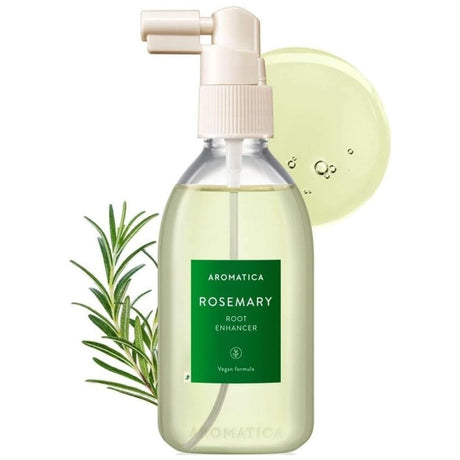


Aromatica
Aromatica Rosmarinwurzel-Verstärker, stärkendes Haarwasser - 100 ml
Normaler Preis €21.19Grundpreis€211.90 /l

 Um 25% reduziert
Seapuri
Seapuri Scalpy Bubble Anti-Schuppen- und Haarausfall-Tonikum - 100 ml
Verkaufspreis €20.54 Normaler Preis €27.39Grundpreis€205.40 /l


Some by Mi
Some By Mi Cica Peptide Anti-Haarausfall-Toner - 150 ml
Normaler Preis €11.79Grundpreis€78.60 /l

 Um 6% reduziert
Aromatica
Aromatica Rosmarin-Kopfhautpeeling - 165 g
Verkaufspreis €15.01 Normaler Preis €15.89Grundpreis€90.97 /kg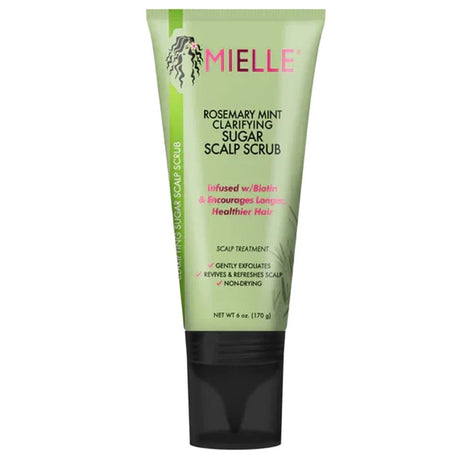


Mielle Organics
Mielle Rosmarin-Minze klärendes Zucker-Kopfhautpeeling - 170 g
Normaler Preis €14.69Grundpreis€86.41 /kg


Key Takeaway: A scalp tonic is a lightweight, no-rinse formula applied directly to the scalp between sections of hair. Choose ingredients based on your scalp type — rosemary and caffeine are studied for scalp condition, niacinamide and zinc pyrithione help with oiliness and dandruff, and panthenol with aloe hydrate. Apply along partings with a gentle massage, stay consistent, and give it several weeks before judging results.
Dieser Artikel dient nur der Information und ersetzt keine ärztliche Beratung. Bei gesundheitlichen Beschwerden, in der Schwangerschaft, Stillzeit oder bei Einnahme von Medikamenten wenden Sie sich an einen Arzt oder Apotheker. Nahrungsergänzungsmittel sind kein Ersatz für eine abwechslungsreiche Ernährung.


