

Leinsamen (Linum usitatissimum) gehören zu den nährstoffreichsten Lebensmitteln überhaupt – ein echtes Superfood im wahrsten Sinne des Wortes. Klein, braun oder goldfarben und mit einem milden nussigen Geschmack, enthalten sie in jedem Gramm eine außergewöhnliche Konzentration an Ballaststoffen, pflanzlichen Omega-3-Fettsäuren, Lignanen und schützenden Schleimstoffen. Gewichtsmanagement ist der Anwendungsbereich, den die meisten Menschen mit Leinsamen in Verbindung bringen, doch regelmäßiger Verzehr unterstützt ein weitaus breiteres Spektrum an Körpersystemen – von der Herz-Kreislauf- und Verdauungsgesundheit über den Hormonhaushalt bis hin zum Hautzustand und zur Knochendichte. Hier finden Sie einen umfassenden Überblick darüber, was Leinsamen enthalten, was sie unterstützen können und wie man sie effektiv einsetzt.
Was enthalten Leinsamen?
Leinsamen bieten ein ungewöhnlich vollständiges Nährstoffprofil. Ihre wichtigsten Bestandteile sind:
- Ballaststoffe — sowohl lösliche als auch unlösliche Arten in bedeutenden Anteilen
- Alpha-Linolensäure (ALA) — die pflanzliche Omega-3-Fettsäure, die in Konzentrationen vorliegt, die von kaum einem anderen pflanzlichen Lebensmittel erreicht werden
- Lignane — polyphenolische Verbindungen mit antioxidativen und phytoöstrogenen Eigenschaften; Leinsamen sind die reichhaltigste bekannte Nahrungsquelle
- Schleimstoffe — gelbildende Substanzen, die die Magen-Darm-Schleimhaut umhüllen und schützen
- Pflanzensterine — Verbindungen, die mit Cholesterin um die Aufnahme konkurrieren
- Vollständiges Aminosäureprofil — liefert alle essentiellen Aminosäuren, was Leinsamen zu einer wertvollen pflanzlichen Proteinquelle macht
- Vitamine und Mineralstoffe — Kalzium, Kalium, Magnesium, Mangan, Kupfer, Zink, Selen, Vitamin C, Vitamin E, Vitamin K, Folsäure, Niacin, und B-Vitamine
Goldene Leinsamen haben eine etwas höhere Nährstoffdichte als braune Sorten, obwohl beide ernährungsphysiologisch wertvoll sind. Beide sind ganz oder gemahlen erhältlich – und die Form ist wichtiger als die Farbe.
Verdauungsgesundheit: Ballaststoffe und Schleimstoffe
Leinsamen enthält zwei sich ergänzende Arten von Ballaststoffen. Lösliche Ballaststoffe bilden im Verdauungstrakt ein viskoses Gel, das die Magenentleerung verlangsamt, das Sättigungsgefühl nach den Mahlzeiten verlängert, und die Aufnahme von Glukose und Cholesterin in den Blutkreislauf moderiert. Unlösliche Ballaststoffe erhöhen das Stuhlvolumen, regen die Darmperistaltik an, und unterstützen einen regelmäßigen Stuhlgang. Zusammen machen diese Ballaststoffarten Leinsamen zu einem der wirksamsten Nahrungsmittel bei träger Verdauung und Verstopfung. Über Ballaststoffe hinaus bilden die schleimigen Verbindungen des Leinsamens – die freigesetzt werden, wenn die Samen in Wasser eingeweicht werden – einen schützenden Film über der Magen- und Darmschleimhaut. Dies ist besonders relevant für Menschen mit Magengeschwüren, Gastritis, oder Reizdarmsyndrom, da es eine physische Barriere bildet, die entzündetes Gewebe beruhigt. Die traditionelle Zubereitung von Leinsamengel (– das Einweichen ganzer Samen in warmem Wasser, bis eine dickflüssige Masse entsteht) – bleibt eines der wirksamsten natürlichen Heilmittel für diese Beschwerden. Für eine ergänzende Unterstützung der Verdauung, entdecken Sie unsere Kollektion für das Verdauungssystem.
Unterstützung des Herz-Kreislauf-Systems: Omega-3, Lignane, und Ballaststoffe wirken zusammen
Leinsamen tragen durch drei parallele Wirkmechanismen zur Herz-Kreislauf-Gesundheit bei. Ihr ALA-Omega-3-Gehalt hilft, den Triglyceridspiegel zu senken und entzündliche Prozesse zu regulieren, die an Arterienschäden beteiligt sind. Ihre löslichen Ballaststoffe und Pflanzensterine verringern die Aufnahme von LDL-Cholesterin im Darm. Und ihre Lignane entfalten eine antioxidative Wirkung, die LDL-Partikel vor Oxidation schützt – dem entscheidenden ersten Schritt bei der Bildung von atherosklerotischen Plaques. Der regelmäßige Verzehr von Leinsamen wird in Beobachtungsstudien mit einem verringerten Risiko für koronare Herzerkrankungen und einer verbesserten Blutdruckregulation in Verbindung gebracht. Entdecken Sie ergänzende Herz-Kreislauf-Nahrungsergänzungsmittel in unserer Herz-Kreislauf-Kollektion. Lignane und Hormonhaushalt: Besonders relevant für Frauen Leinsamen sind die reichhaltigste bekannte Nahrungsquelle für pflanzliche Lignane — insbesondere Secoisolariciresinol-Diglucosid (SDG), das von Darmbakterien in Enterolignane (Enterodiol und Enterolacton) mit milder phytoöstrogener Wirkung umgewandelt wird. Diese Verbindungen können Östrogenrezeptoren auf eine Weise besetzen, die die hormonelle Signalübertragung moderiert – was besonders relevant ist, wenn der endogene Östrogenspiegel Schwankungen unterliegt.
Während der Menopause, wenn der Östrogenspiegel stark abfällt, können Lignan-Phytoöstrogene dazu beitragen, die Häufigkeit und Intensität von Hitzewallungen zu verringern, die Knochenmineraldichte zu verbessern, und die Stimmungsstabilität zu unterstützen. Bei Frauen mit Endometriose kann die durch Lignane vermittelte Modulation der Östrogenaktivität dazu beitragen, die Menstruationsblutung zu regulieren. Dieselben antioxidativen Eigenschaften der Lignane, die das Herz-Kreislauf-System schützen, tragen auch zu einer schützenden Wirkung gegen hormonsensitive Gewebeveränderungen bei. Gewichtsmanagement und Sättigungsgefühl Der Ruf von Leinsamen im Bereich des Gewichtsmanagements ist wohlverdient, auch wenn der Mechanismus eher einfach als magisch ist. Ihre Kombination aus löslichen Ballaststoffen und Proteinen sorgt für einen der nachhaltigsten Sättigungseffekte, die ein Vollwertnahrungsmittel bieten kann. Ein Esslöffel gemahlener Leinsamen, der einer Mahlzeit hinzugefügt wird, verlangsamt die Magenentleerung, verzögert das Wiederauftreten von Hunger, und reduziert die Gesamtkalorienaufnahme bei nachfolgenden Mahlzeiten ohne jeglichen pharmakologischen Eingriff. Ihr geringer Netto-Kalorienbeitrag – da ein erheblicher Teil ihrer Kalorien aus Ballaststoffen stammt, die nicht vollständig verstoffwechselt werden – macht sie zu einer kalorieneffizienten Nahrungsergänzung. Für einen umfassenderen Ansatz zur gesunden Gewichtsregulierung, siehe unsere Sammlung zum Thema Gewichtsabnahme.
Verwendung von Leinsamen – Praktische Formen
Der wichtigste praktische Aspekt bei Leinsamen ist, dass ganze Samen den Verdauungstrakt weitgehend unverdaut passieren – ihre harte äußere Schale verhindert, dass der Körper an den Großteil der Nährstoffe gelangt. Um den vollen Nutzen zu erzielen, sollten die Samen unmittelbar vor dem Verzehr mit einer Kaffee- oder Gewürzmühle gemahlen oder als gemahlene Leinsamen gekauft werden. Gemahlene Leinsamen können zu Haferflocken, Joghurt, Smoothies, Brotteig, Suppen und Salaten hinzugefügt werden – sie lassen sich in fast jede Zubereitung integrieren, ohne den Geschmack wesentlich zu verändern.
Das traditionelle Leinsamengel (Kisiel) wird zubereitet, indem man zwei Esslöffel ganze Samen eine Stunde lang in einem Glas warmem Wasser einweicht, abseiht, und die dickflüssige Flüssigkeit zwei- bis dreimal täglich zu sich nimmt. Diese Form ist am wirksamsten bei Magen-Darm-Beschwerden. Bei Atemwegserkrankungen und Halsschmerzen, kann das Gel mit Honig angereichert werden. Bei äußerlicher Anwendung, bietet dasselbe Gel eine pflegende, und nährende Behandlung für Haut und Haar.
Die empfohlene Tagesdosis beträgt mindestens 10 g (– etwa einen Esslöffel gemahlene Samen) – für gesundheitliche Vorteile, wobei die praktische Obergrenze aufgrund der Kaloriendichte bei etwa 50 g pro Tag liegt. Beginnen Sie mit der unteren Grenze und steigern Sie die Menge schrittweise, damit sich das Verdauungssystem an die erhöhte Ballaststoffzufuhr gewöhnen kann.
Leinsamenöl – eine konzentrierte Quelle für Omega-3-ALA
Kaltgepresstes Leinsamenöl (konzentriert das Omega-3-Fettsäureprofil der Samen ohne die Ballaststoffe. Es ist eine der reichhaltigsten pflanzlichen Quellen für ALA, die in flüssiger Form erhältlich ist, was es wertvoll für diejenigen macht, die nach pflanzlicher Omega-3-Unterstützung suchen. Es kann über Salate und gekochtes Gemüse geträufelt, in Smoothies gemischt, oder direkt eingenommen werden – sollte jedoch niemals erhitzt werden, da ALA bei erhöhten Temperaturen sehr oxidationsempfindlich ist. Leinöl wird auch äußerlich zur Pflege von Haut und Kopfhaut verwendet, und unterstützt die Zellregeneration sowie die Feuchtigkeitsspeicherung.
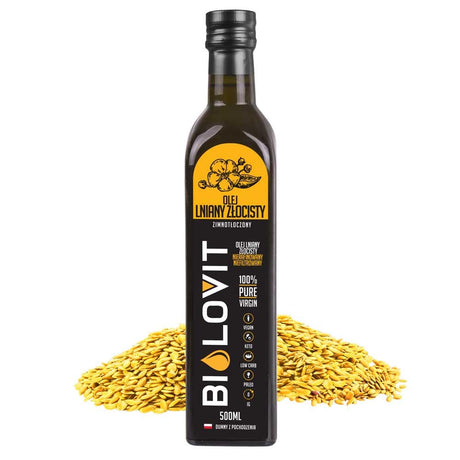
Bei Medpak, sind kaltgepresste Lein- und Goldleinsamenöle in kleineren und größeren Formaten von Bilovit, Wellbear, und Olvita erhältlich – allesamt hochwertige, sorgfältig hergestellte, kaltgepresste Produkte:
 Um 11% reduziert
Bilovit
Bilovit Golden Flaxseed Oil Kaltgepresst - 500 ml
Verkaufspreis €5.39 Normaler Preis €6.09Grundpreis€10.78 /l


 Um 11% reduziert
Wellbear
Wellbear Leinöl kaltgepresst - 500 ml
Verkaufspreis €4.79 Normaler Preis €5.39Grundpreis€9.58 /l
Olvita
Olvita Kaltgepresstes Leinöl für die Dr. Budwig Diät Ungereinigt - 500 ml
Normaler Preis €11.79Grundpreis€23.58 /l


Leinsamenöl vs. Fischöl: Den Unterschied verstehen
Eine häufig gestellte Frage ist, ob Leinsamenöl Fischöl als Omega-3-Quelle ersetzen kann. Die Antwort erfordert eine Unterscheidung. Leinöl liefert ALA – eine kurzkettige Omega-3-Fettsäure, die der Körper in EPA und DHA (, die in Fischöl) vorkommenden langkettigen Formen, umwandeln muss, um den Großteil der kardiovaskulären und neurologischen Vorteile nutzen zu können. Diese Umwandlung ist beim Menschen ineffizient – typischerweise werden nur 5–15 % des ALA umgewandelt. Für Menschen, die Fischprodukte meiden, bleibt Leinsamenöl eine sinnvolle pflanzliche Omega-3-Quelle, sollte jedoch nicht als gleichwertig mit Fischöl für Anwendungen im Bereich der Herz-Kreislauf- oder Gehirngesundheit angesehen werden. Für eine gezielte EPA/DHA-Supplementierung, siehe unsere Fischöl- & Omega-3-Kollektion.
Dieser Artikel dient nur der Information und ersetzt keine ärztliche Beratung. Bei gesundheitlichen Beschwerden, in der Schwangerschaft, Stillzeit oder bei Einnahme von Medikamenten wenden Sie sich an einen Arzt oder Apotheker. Nahrungsergänzungsmittel sind kein Ersatz für eine abwechslungsreiche Ernährung.


